Then fold the excess tarp under a few rotations for a tight clean fit.
Glue down a tarp on the roof.
Don t expose the glue to air long enough for it to begin drying.
Positions several 1 2 pieces of lumber on the tarp running vertically down the slope of the roof.
Let the rest of the tarp hang off the lower border of the roof that overhangs the wall known as the eave.
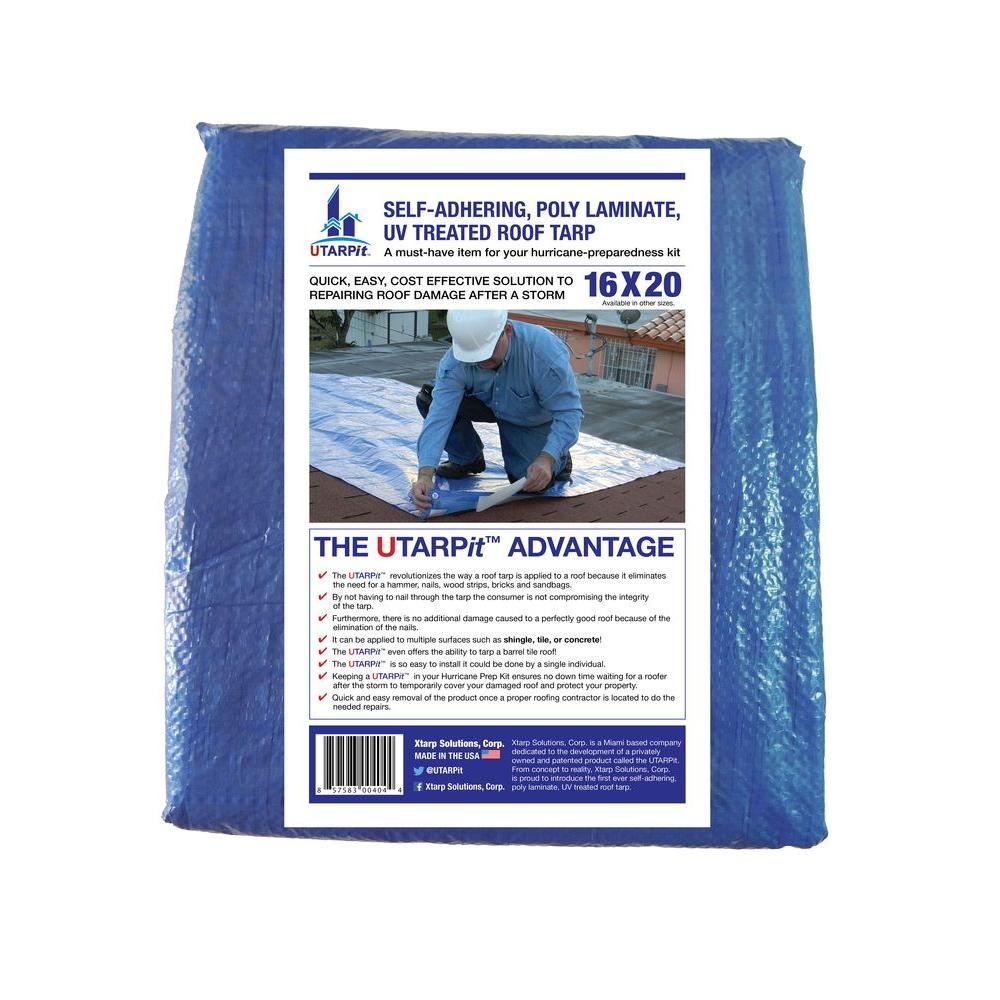
Utarpit is the best solution to protect assets pre and post various weather conditions.
Pull away from each other until the tarp is fully unrolled.
Lay down a line of glue in lengths short enough for you to manage easily while keeping the tarp straight and even.
The utarpit tarp is a self adhesive water mitigation product.
Don t forget to secure the strapping used in step 4.
Lay the tarp across the roof so that at least 4 feet 1 2 m lies on the sloped part of your roof on each side known as the peak.
Attach the 1x2s through the tarp and into the roof decking with eight penny nails about every 16 inches.
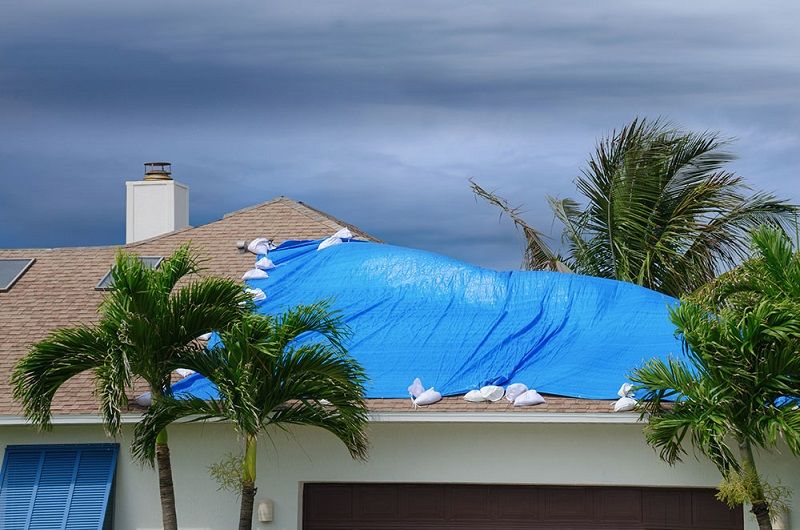
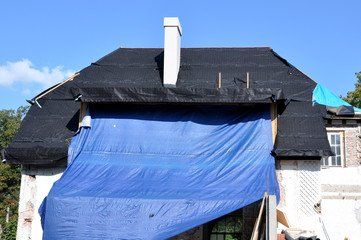
Lay the tarp flatly over the damaged area and make sure there are at least 4 feet of it overhanging past the roof s peak and the rest over the eave.
Lay the tarp out flat over the roof.
The reason for the longer nails is to go through the furring strips the tarp and then just enough length will be left to bite into the roof sheathing.
Partially unroll your tarp to cover the damaged area from the roof s eaves to peak.
Screw the 2 by 4 directly into the roof to secure it.
It eliminates the need for hammers wood stripes nails bricks and sandbags when trying to cover the damaged roof area.
Screw the roll side down either at the edge of the roof or to the fascia with a few screws.
There should be an additional 4 feet.
The 2 by 4 should be about 2 feet longer than the tarp width.
Apply the specially formulated plastic glue to the two tarps to be attached as directed in the packaging.
Lay more 2 by 4s on either side of the tarp and attach those as well for a tight well secured water barrier.
Grab one corner of the tarp and have a helper grab the other end.
To fasten the furring strips to the tarp and roof use 2 to 3 galvanized roofing nails.
Create an anchor board by rolling the tarp s peak end with a 2 x 4 inch board and nailing the tarp to your board with.